Last updated 16 July 2026 · Every claim below is dated and sourced in the verification box at the end
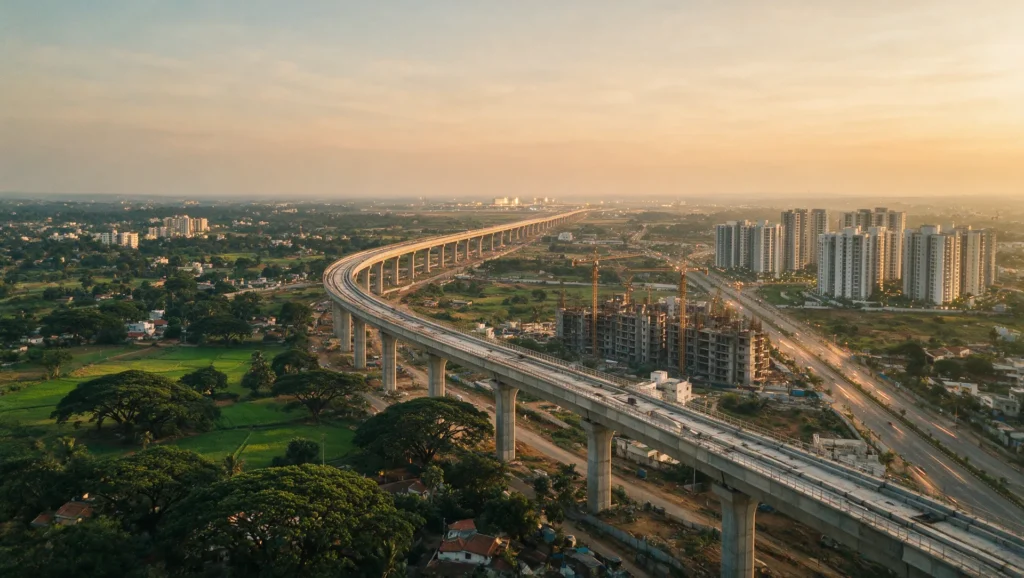
North Bengaluru’s growth is no longer a promise. It is operating: Kempegowda International Airport closed FY2025-26 at 44.47 million passengers, Foxconn’s Devanahalli plant hired about 30,000 people in nine months, SAP opened a 15,000-capacity campus, and the metro’s Hebbal–Airport leg is targeted for June 2027. Corridor homes still price at roughly ₹9,700–12,500 per sq ft, against Hebbal’s ₹14,450.
Every city has a corridor that gets talked about for a decade before anything happens. North Bengaluru spent its decade being talked about. What changed in the last eighteen months is that the talking points started turning into operating assets: a factory that ships iPhones, an airport that crossed 400 million cumulative passengers, a flyover loop that actually opened on New Year’s Day. This piece lays out what is real, what is targeted, and what is still on paper, with dates on everything, because in infrastructure the date is the fact.
When does the metro actually reach the airport corridor?
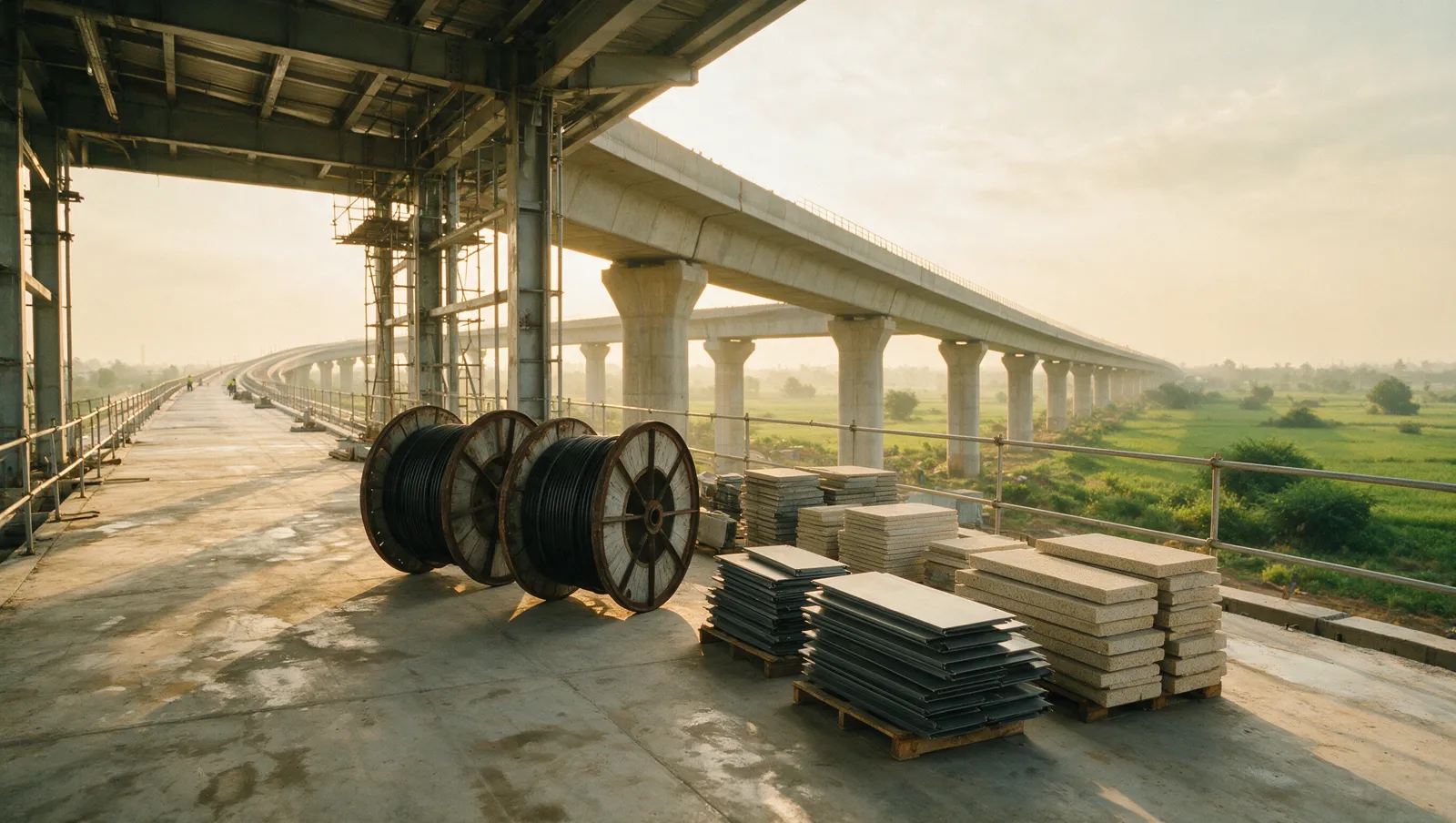
The current official phasing puts the Hebbal–Airport stretch at June 2027. Unusually, that leg is running ahead of the city-side section it connects to: the Silk Board–KR Puram stretch is targeted for December 2026, and KR Puram–Hebbal for December 2027. Anyone telling you “airport metro by 2026” is quoting a stale plan.
The Blue Line is a 58.19 km corridor from Central Silk Board to the airport via KR Puram, Hebbal and Yelahanka. Civil works stood at about 71% at the end of April 2026, up from 52.5% in June 2025. That is genuine, measurable momentum. The first six-coach driverless trainset, built by BEML, was delivered to the Baiyappanahalli depot on 7 June 2026, and trial runs on the Outer Ring Road stretch are expected from around October 2026.
| Blue Line section | Target opening | Status, mid-2026 |
|---|---|---|
| Silk Board – KR Puram (ORR) | December 2026 (targeted) | Track plinth casting ~80–86%; trial runs from ~Oct 2026 |
| Hebbal – Airport | June 2027 (targeted) | Running ahead of the middle leg; viaduct largely done near Bagalur Cross |
| KR Puram – Hebbal | December 2027 (targeted) | The last leg to close the line |
Phasing as reported June 2026 (Swarajya, Daily Jagran quoting the Deputy CM and BMRCL). Metro dates in Bengaluru have a long history of slipping: treat every date as a target, not a promise.
For the corridor’s residential belts, the stations that matter are Yelahanka, Bagalur Cross, Doddajala and Airport City. Bagalur Cross sits about 2.5 km from the Sathanur belt we cover in our Sathanur location guide. That is close enough to change the commute maths of every project along Bagalur Main Road once the June 2027 leg opens.
How big is the airport economy now?
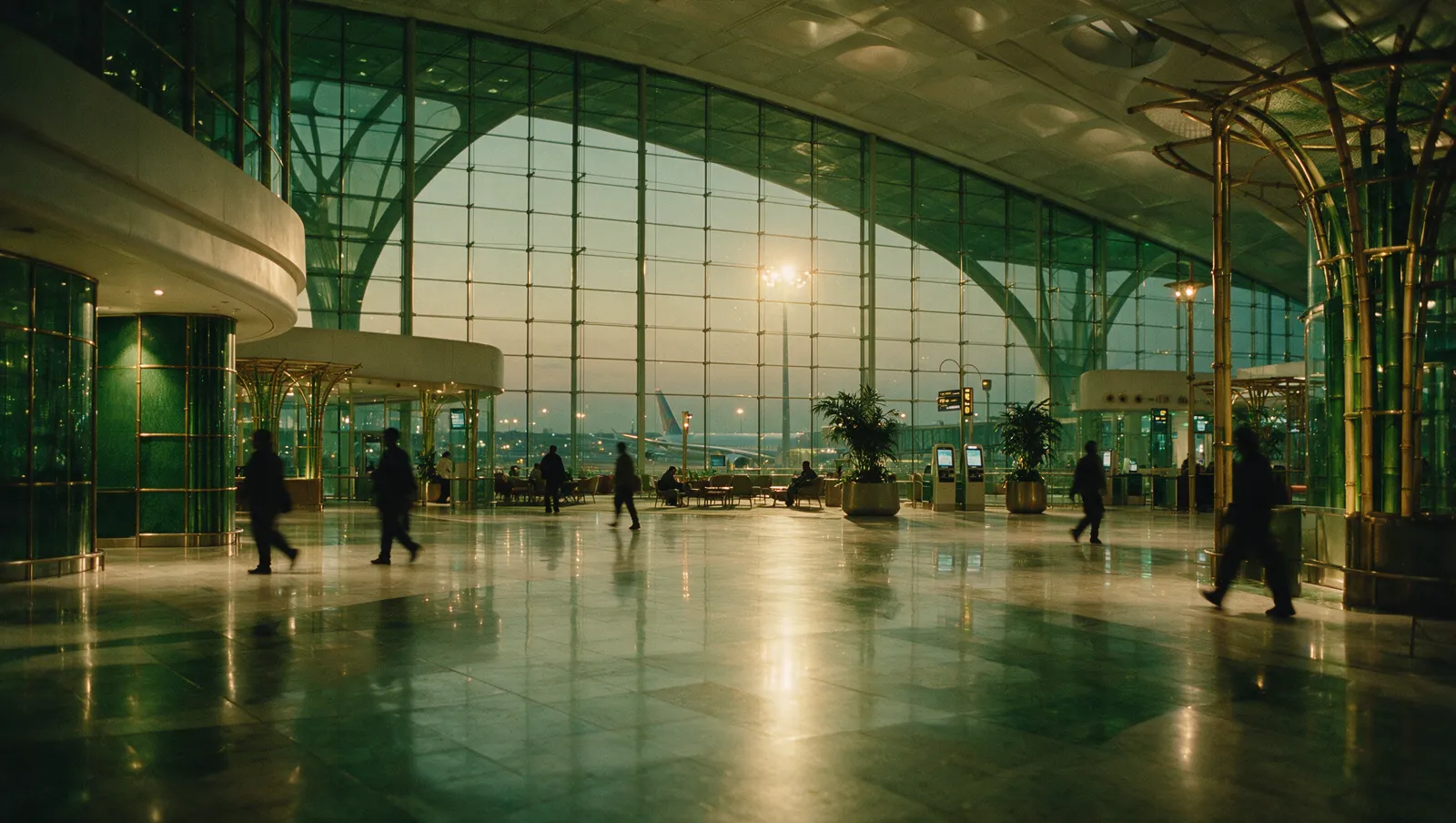
Big enough to stop calling it potential. In FY2025-26, Kempegowda International handled 44.47 million passengers, up 6.2%, and the international segment grew 23.9% to 7.23 million. The airport crossed 400 million cumulative passengers and set a single-day record of 1.39 lakh travellers in the same year.
The buildout continues on the ground: Terminal 2’s Phase-2 expansion targets 2028, taking combined T1+T2 capacity to about 85 million; Terminal 1’s refurbishment begins August 2026; a third terminal remains at master-plan stage for around 2030. Around the terminals, Bengaluru Airport City is turning aeronautical land into an employment district. A 2-million-sq-ft business park aimed at global capability centres broke ground in October 2024, a 775-key Vivanta-and-Ginger hotel complex is expected to complete by end-2026, a 10,000-capacity concert arena is planned for around 2027-28, and on 11 June 2026 Prestige Group and Bangalore Airport City announced a convention-centre-anchored destination.
Where are the jobs actually coming from?
Three anchors, each of a different kind: a factory, a research campus and an office park.
Foxconn, Devanahalli. The iPhone plant on the ITIR land commissioned in mid-2025 and, by December 2025 reporting, had hired about 30,000 workers in its first nine months. That is India’s fastest factory ramp-up, and roughly 80% of the hires are young women in their first formal jobs. The plant produces the iPhone 17 Pro Max, with total investment reported near ₹20,000 crore. The 2026 target of 50,000 jobs is exactly that, a target. The verified number is 30,000.
SAP Labs, Devanahalli. A 41-acre, €194-million Innovation Park opened in 2025 with about 3,200 employees moved in and a stated capacity of 15,000. That is double the size of SAP’s Whitefield campus, with Phase 2 building toward Q3 2028. A research campus of this scale changes the salary profile of the corridor, not just its headcount.
The established base. The KIADB Aerospace Park (Boeing, Airbus, Collins Aerospace, Safran-HAL and others) keeps compounding. Collins’ new 26-acre campus alone was expected to add around 2,200 jobs by 2026. And on the city side of the corridor, Embassy Manyata signed Commonwealth Bank of Australia to roughly 1.4 million sq ft, delivering from Q4 2026. That deal is a reminder that Hebbal–Nagawara remains the corridor’s paycheck engine while Devanahalli grows into one.
What about the roads?
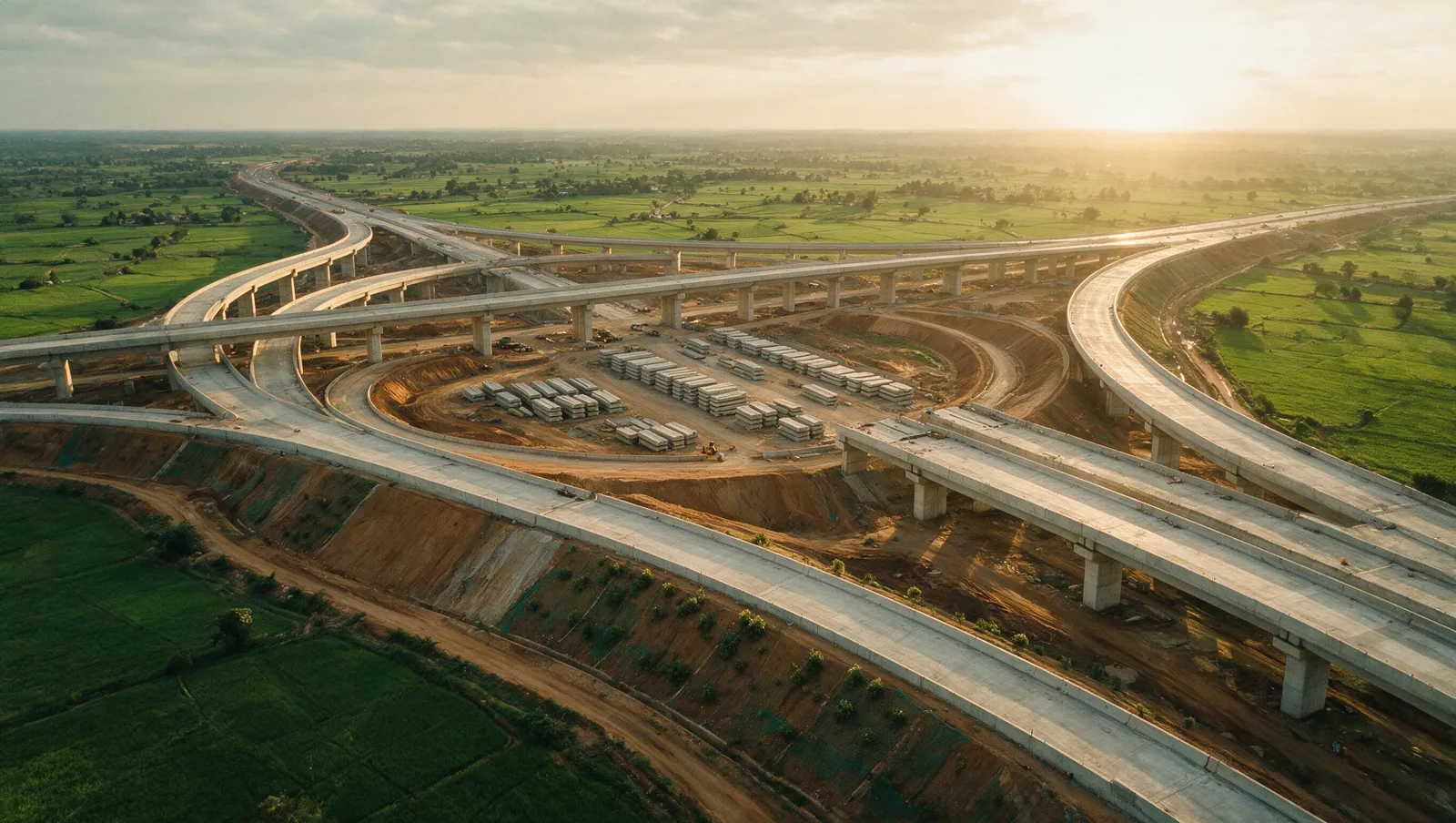
The quiet workhorse changes are already open. A new Hebbal flyover loop toward Mekhri Circle opened on 1 January 2026, smoothing the airport-to-city run that every Yelahanka and Jakkur commuter knows too well, with further widening from two to six lanes in progress. The Satellite Town Ring Road already runs 80 tolled kilometres from Dobbaspete to Hoskote. The 20.9-km Hoskote–Tamil Nadu border leg was 97% complete and pending one railway overbridge as of the latest reporting: nearing completion, not yet confirmed open.
The bigger story is the Bengaluru Business Corridor, the renamed Peripheral Ring Road that spent fifteen years on paper. In 2026 it finally moved: environmental clearance on 27 April, two bids received for the ₹3,348-crore first phase on 8 May, land acquisition about 83% done, and construction expected to begin around Q3 2026 on a 36-month clock. Suburban rail is the laggard. The overall project is about 22% complete, and the corridor that matters here (KSR–Yelahanka–Devanahalli, with a 5.5-km airport branch) is tendered but fluid; treat “around 2028” as optimistic.
Is housing demand actually following the jobs?
Yes, and measurably. Anarock’s Q1 2026 primary research puts North Bengaluru at 34% of the city’s new launches (up 37% quarter-on-quarter) and 33% of sales, making it the second-largest zone in the city after the east. And 58% of Bengaluru’s new supply now lands in the ₹1.5–2.5 crore band, which is precisely where the corridor’s new projects price.
| Micro-market | Rate, mid-2026 (₹/sq ft) | 1-year change |
|---|---|---|
| Bagalur | ~9,700 | +13.5% (and +120% over five years) |
| Devanahalli | 9,800–12,550 | n/a |
| Yelahanka | ~10,450 | +20.1% |
| Thanisandra | 10,750–14,700 | n/a |
| Hebbal | ~14,450 | +12.4% |
Portal rate pages (99acres), July 2026 snapshots; Thanisandra Main Road’s Anarock Q1-2026 datum is ₹10,100/sq ft. Asking rates, not registered prices. Use them for relative position, not gospel.
The honest counterweight: Bengaluru’s available inventory rose 24% year-on-year to about 72,800 units, and the city’s inventory overhang stretched to 14 months. Supply is arriving in volume. That is good news for buyers negotiating in 2026, and a caution against assuming every launch appreciates on schedule. We track corridor pricing project-by-project, with sources and dates on every cell, in our quarterly North Bengaluru price & RERA tracker.
What should a buyer actually do with all this?
Three disciplines, none of them exciting:
- Buy on today’s access, price the promises at a discount. The Hebbal loop is open; the metro is June 2027 targeted; suburban rail is “around 2028, fluid”. A home that works for your life before the metro opens is an investment. One that only works after it opens is a bet.
- Date-stamp every claim you’re shown. The corridor’s marketing recycles 2024 numbers freely. If a brochure quotes a jobs figure or a metro date without a month and a source, ask for one, or check it against pages like this and the under-₹2-crore project list where we cite everything.
- Underwrite water like a cost line. Growth ran ahead of pipes here. Cauvery Stage V reaches Yelahanka’s BBMP villages but not the fringe beyond, and Devanahalli waits for Stage VI. Our water-reality guide has the checklist.
The belt between Yelahanka and Devanahalli (Sathanur and Bagalur Main Road) is where the corridor’s value case currently concentrates: under the metro’s 2027 leg, beside the Aerospace Park’s payrolls, at ₹9,700–12,500 per sq ft while Hebbal asks ₹14,450. If you want to walk that belt with someone who works it, book a site visit, or start with the numbers and read the tracker first. We’d honestly rather you did both.
- Blue Line trial runs from October 2026; ~71% civil progress; phasing (Swarajya), 21 Jun 2026.
- Revised Blue Line deadlines: Dec 2026 / Jun 2027 / Dec 2027 (Daily Jagran), 8 Dec 2025.
- BEML delivers first driverless Blue Line trainset (Metro Rail News), Jun 2026.
- BIAL FY2025-26: 44.47M passengers, +23.9% international (Deccan Herald), Apr 2026.
- T1 revamp from August; T2 Phase-2 by 2028 (Swarajya), 2026.
- Airport City 2M sq ft GCC business park groundbreaking (ACI Asia-Pacific), 14 Oct 2024.
- Prestige + BACL convention-centre destination (InvestyWise), 11 Jun 2026.
- Foxconn Devanahalli: ~30,000 hired, iPhone 17 Pro Max, ~₹20,000 Cr (Business Standard), 22 Dec 2025.
- SAP Labs €194M Devanahalli Innovation Park, 15,000 capacity (BW Businessworld), 2025.
- Embassy Manyata: ~1.4M sq ft CBA campus, delivery Q4 CY2026 (Embassy REIT, official).
- Hebbal flyover’s new loop opens (Newsfirst Prime), 1 Jan 2026.
- Bengaluru Business Corridor Phase-1 global tender (ETV Bharat), Mar 2026; environmental clearance 27 Apr 2026.
- KWIN City official page, siting Doddaballapura–Dabaspet (KIADB); Toyota Kirloskar MoU, May 2026.
- Bengaluru Residential Market Viewpoints Q1 2026 (Anarock, primary PDF): North Bengaluru 34% of launches; overhang 14 months.
- Micro-market rate pages: Yelahanka, Bagalur, Devanahalli, Thanisandra, Hebbal (99acres), Jul 2026 snapshots.