Last updated 16 July 2026 · Facts checked against the sources listed at the end
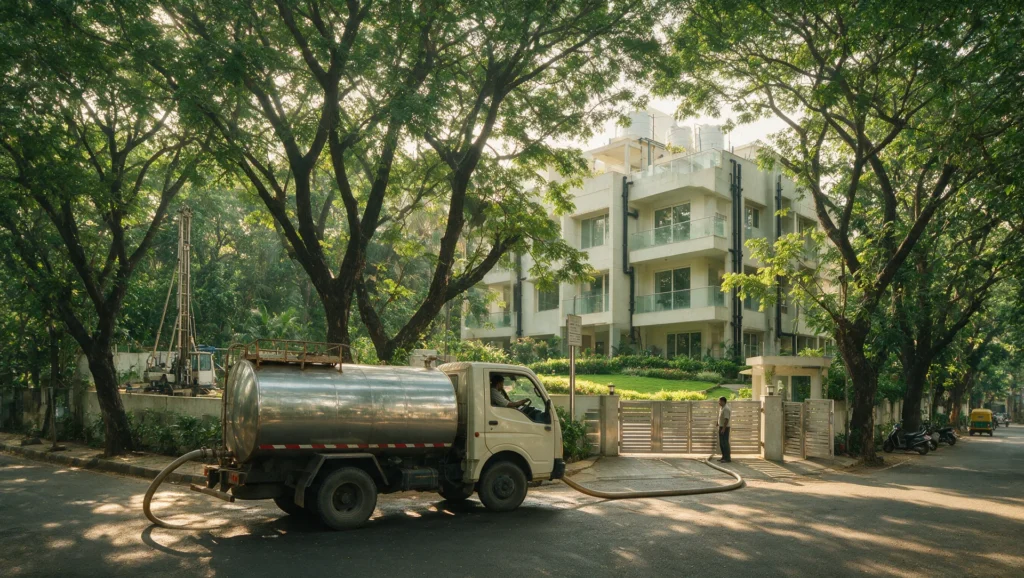
Yes. Treat water as a cost line, not a footnote. The Central Ground Water Board classes all of urban Bengaluru, including Bangalore North and Yelahanka taluks, as over-exploited. But the picture splits sharply by micro-market: Yelahanka, inside BBMP, now gets piped Cauvery under Stage V; the Sathanur–Bagalur fringe and Devanahalli run on borewells and tankers until Stage VI is built.
How bad is North Bengaluru’s groundwater, really?
Officially, as bad as the classification gets. The Central Ground Water Board (CGWB) categorises every urban Bengaluru assessment unit (Bangalore North and Yelahanka taluks included) as over-exploited: more water is drawn each year than the aquifer recharges. In the northern taluks, extraction runs at more than double the recharge rate. That is the baseline under every borewell promise you will hear on a site visit.
The 2024 crisis showed what the label means in practice. Of roughly 13,900 borewells across the city, about 7,000 ran dry at the peak, per compilations of that year’s reporting. Replacement borewells in parts of Bengaluru chased the water table down to around 1,500 ft. And the decline did not stop when the rains returned: peripheral water tables were reported a further 10–15 metres lower going into 2025.
None of this makes North Bengaluru unliveable: lakhs of households manage well on a mix of piped water, borewells and tankers. It does mean the aquifer is not a free backstop. A borewell in an over-exploited zone is a depreciating asset with an uncertain life, and the honest way to underwrite a flat here is to assume some paid water in the mix, most years.
Does Cauvery water actually reach North Bengaluru?
Parts of it, yes, and the boundary is precise. Cauvery Stage V, inaugurated on 16 October 2024, pipes 775 million litres a day to the 110 villages added to BBMP in 2007, across eight zones that include Yelahanka and Byatarayanapura. If an address sits inside BBMP limits in those zones, piped Cauvery is either flowing or a formal application away. Outside BBMP limits, Stage V supplies nothing.
Stage V is substantial infrastructure, not a press release: ₹4,336 crore, JICA-funded, anchored by what was reported as India’s largest water-treatment plant at TK Halli, and designed for about 4 lakh connections serving roughly 50 lakh people. Uptake is the honest caveat. By early 2026, reported connections had crossed 1.7 lakh, well under half the design target, with rollout still working through the covered villages.
Coverage on paper and water in the tap are not the same thing either. OpenCity’s October 2025 survey of apartment complexes found northern localities inside BBMP (Horamavu, Jakkur, Vidyaranyapura) still without Stage V connections and buying tanker water. The gap between the coverage map and a working meter is exactly what a buyer’s diligence has to measure.
| Area | Piped Cauvery today? | What to check |
|---|---|---|
| Yelahanka (BBMP zone) | Yes, in Stage V coverage | The specific property’s connection status, not just the zone |
| Byatarayanapura (BBMP zone) | Yes, in Stage V coverage | Has the society applied, and is the connection metered? |
| Bellahalli–Kattigenahalli (Bagalur corridor, inside BBMP) | In the coverage list | Rollout was still in progress in 2025–26 reporting |
| Jakkur / Horamavu / Vidyaranyapura (inside BBMP) | Not yet, per the Oct 2025 survey | Connection timeline with BWSSB; tanker budget meanwhile |
| Sathanur–Bagalur fringe (outside BBMP) | No, outside Stage V limits | The project’s own water plan: borewells, storage, tanker budget |
| Devanahalli | No | Stage VI status: approved Feb 2026, unbuilt |
Source: BWSSB stage-wise supply-area data via OpenCity and the reporting listed in the sources box, as of July 2026. Coverage is not a connection, so verify the survey number with BWSSB.
What about Devanahalli and the airport corridor?
No piped Cauvery reaches Devanahalli today. The town and the apartment belt rising around Kempegowda International Airport run on borewells and tankers. The sanctioned fix is Cauvery Stage VI, cleared by the Karnataka cabinet in February 2026 at ₹6,939 crore for 500 MLD, which names Devanahalli, Hunasemaranahalli and the airport corridor among its beneficiaries. Approved is not built.
On paper, Stage VI takes Bengaluru’s total Cauvery supply to 2,775 MLD and serves about 30 lakh people across peripheral local bodies: Devanahalli, Hunasemaranahalli, Vijayapura, Bashettihalli, Nelamangala, Hoskote, Chikkabanavara and Madanayakanahalli, plus the Shivaram Karanth Layout and the airport corridor. Read the dependencies before pencilling in a date: about 130 acres of land still to be acquired, and World Bank or JICA funding still being arranged as of the approval reporting. There is no published commissioning date, and we would treat any date quoted in a sales conversation as marketing until BWSSB publishes one.
That is the corridor’s paradox. The jobs and infrastructure story is real (we set it out in the airport-corridor growth piece), but piped water lags it by years. For a Devanahalli or Bagalur-fringe buyer, that is not a reason to walk away; it is a reason to underwrite borewells and tankers as the base case for the first years of ownership, and to book Stage VI as upside, not baseline. Weighing the established side of the belt against the frontier? Our Yelahanka vs Devanahalli head-to-head runs this logic across both.
- Groundwater status
- Over-exploited (CGWB); extraction above 2× recharge in the northern taluks
- Piped Cauvery (Stage V)
- Commissioned 16 Oct 2024: ₹4,336 Cr, 775 MLD, 110 BBMP villages incl. Yelahanka & Byatarayanapura zones
- Connections
- Over 1.7 lakh by early 2026, against a 4-lakh design target
- Outside BBMP limits
- No Stage V supply: borewell and tanker markets
- Stage VI
- Approved Feb 2026: ₹6,939 Cr, 500 MLD, Devanahalli & the KIA corridor; land and funding pending
- Tanker benchmark
- ₹1,290 per 12,000 L (BWSSB Sanchari); private market ₹1,000–2,500 by season and locality
What do apartment complexes actually pay for tanker water?
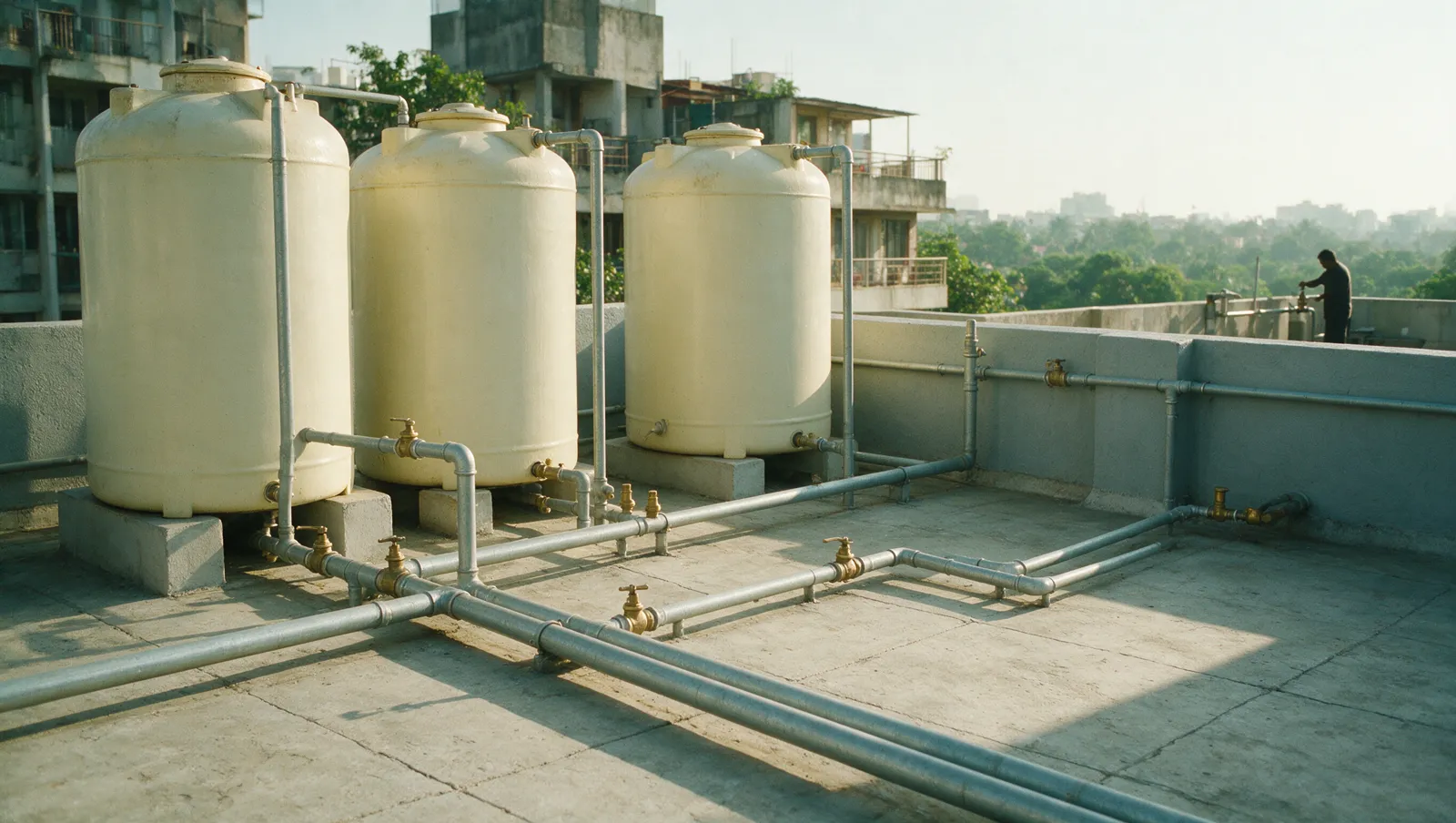
Between ₹740 and about ₹3,000 a load, depending on who is selling and when. BWSSB’s GPS-tracked Sanchari Cauvery tankers charge ₹740 for 6,000 litres and ₹1,290 for 12,000 litres within 2 km of a filling point. The private market ran at ₹1,800–2,500 per 12,000-litre load before the March 2024 district caps of ₹1,000–1,200, with peaks near ₹3,000 at the height of that crisis.
| Supply | Price | Conditions |
|---|---|---|
| BWSSB Sanchari Cauvery (government) | ₹740 / 6,000 L · ₹1,290 / 12,000 L | Within 2 km; ₹50–70 per extra km |
| Private tanker (capped rate) | ₹1,000–1,200 / 12,000 L | March 2024 district cap, within 10 km |
| Private tanker (market rate) | ₹1,800–2,500 / 12,000 L | Reported pre-cap market range |
| Crisis peak | ~₹3,000 / load | 2024 crisis-period reporting |
Sources: Sanchari Cauvery launch reporting; March 2024 cap-order coverage; OpenCity 2025 survey, all listed in the sources box. Spot rates vary by locality and season.
Scale that up before you sign anything. Take a complex that needs five 12,000-litre loads a day: ₹6,450 a day at Sanchari rates, ₹9,000–12,500 at market rates. Over a 90-day summer, that is roughly ₹5.8 lakh to ₹11 lakh, recovered from residents through maintenance charges. This is arithmetic on the published per-load rates, not a survey figure, but it is precisely the line item to demand from any society or developer you are evaluating.
The fair counterweight: 2025 was better than 2024. In OpenCity’s October 2025 survey, more than half of the apartment complexes surveyed said their water situation had improved on the crisis year. Better is not solved. The same survey found complexes across the north still on daily tanker contracts.
What rules protect a new buyer in 2026?

More than most buyers realise. Enforcement, as ever, is the weak joint. Karnataka and BWSSB have spent 2024–26 hardening the rulebook: rainwater harvesting is compulsory from 1,200 sq ft, sewage treatment and reuse are mandatory above 120 flats, and a new borewell in Bengaluru Urban needs state groundwater-authority clearance before the rig arrives.
- Rainwater harvesting: mandatory for buildings and sites of 1,200 sq ft and above, with compliance recorded through self-declaration and photographs (BWSSB). Ask to see the declaration; do not assume it.
- STP and treated-water reuse: complexes above 120 flats must treat sewage and reuse the treated water, with dual piping prescribed for new buildings so treated water reaches flushing and gardening. BWSSB is drafting a framework to extend greywater recycling to all new buildings, due with the state government by end-2026.
- Borewell permissions: Bengaluru Urban is a notified area under the Karnataka Ground Water Act, 2011, so a new borewell needs Karnataka Ground Water Authority (KGWA) permission, drilling must be done by a KGWA-registered agency, and existing borewells must be registered.
- Extraction metering: since July 2025, complexes drawing more than 25,000 litres of groundwater a day must install digital meters, report usage and pay for extraction beyond the free 25 KL/day allowance.
For a buyer, every rule doubles as a diligence question. Not “is there an STP?” but “show me the STP capacity against the sanctioned unit count, the dual-piping layout, the borewell NOCs and the meter data”. A developer who can produce paper for all four is telling you something. One who cannot is telling you more.
What should you actually check before buying? The 8-point checklist
Eight questions, every one answerable in writing: an email from the developer’s team counts; a sales conversation does not. Together they turn “water problem” from a vague fear into a number you can price into the deal, the same way you would price stamp duty and registration.
- Supply status of the survey number. Inside BBMP and Stage V coverage? Ask for the BWSSB connection or sanction letter. Outside BBMP: which source is contracted for possession day?
- Borewell papers and yield. KGWA NOC, registered driller, borewell registrations, plus a recent yield test (not the yield recorded at drilling).
- STP capacity vs unit count. A plant sized below the sanctioned number of homes is a future tanker bill.
- Dual piping. Confirm treated water is plumbed to flushing and landscaping. It cuts fresh-water demand and is prescribed for new buildings.
- Rainwater harvesting sizing. The rule starts at 1,200 sq ft; ask what storage and recharge capacity is actually installed, not just whether the mandate is met.
- Storage autonomy. Sump plus overhead-tank capacity, expressed in days of normal demand with zero inflow. Ask for the number of days.
- The tanker line in the maintenance budget. For a ready society: last summer’s actual water spend. For a new project: the water assumption inside the maintenance estimate. If the line is missing, it is not because water will be free.
- Water-charge history nearby. Monthly water charges at comparable complexes in the same belt are the best forecast of yours. Two conversations with resident committees will get you real numbers.
Apply the list hardest where piped supply is absent. Sathanur, the village belt off Bagalur Main Road we profile in the Sathanur location guide, sits outside BBMP limits, so it is not on the Stage V coverage list. Projects there, including TVS Emerald Altura, should be evaluated on their own arrangements: borewell NOCs and yields, STP capacity and dual piping, storage autonomy, and the tanker assumption in the maintenance plan. We have not independently verified any project’s water setup. Ask the developer for the water plan in writing and read it against this checklist.
Water is the one North Bengaluru variable that rewards pessimism in the spreadsheet: underwrite tankers as the base case and let Stage V or Stage VI arrive as upside. If you would rather have this conversation handled for you (the checklist put to the developer, answers on paper), talk to the advisory or book a site visit and bring the list.
- Bengaluru and its groundwater (CGWB categorisation) (OpenCity), as of 16 Jul 2026.
- Bengaluru water crisis, compiled 2024 crisis data (PMF IAS), as of 16 Jul 2026.
- Karnataka CM inaugurates Cauvery Stage V project (Project X India), 15 Nov 2024.
- BWSSB Cauvery water connections and rules 2026 (Vault PropTech), as of 16 Jul 2026.
- BWSSB stage-wise Cauvery water supply areas (OpenCity data portal), as of 16 Jul 2026.
- Karnataka cabinet okays ₹6,939 crore Cauvery Stage 6 to add 500 MLD (Deccan Herald), Feb 2026.
- Karnataka govt launches first GPS-enabled water tankers in Bengaluru (Sanchari Cauvery prices) (The Daily Jagran), as of 16 Jul 2026.
- Bengaluru water crisis: administration caps water tanker prices (IBTimes India), Mar 2024.
- Bengaluru water tankers survey 2025: situation better than 2024 (OpenCity), 27 Oct 2025.
- Rain Water Harvesting rules (BWSSB (official)), as of 16 Jul 2026.
- Karnataka Ground Water Authority portal (borewell permission & registration) (KGWA (official)), as of 16 Jul 2026.
- Karnataka’s groundwater policy: what home buyers in Bangalore must know (PropSoch), as of 16 Jul 2026.